Last updated: April 2026
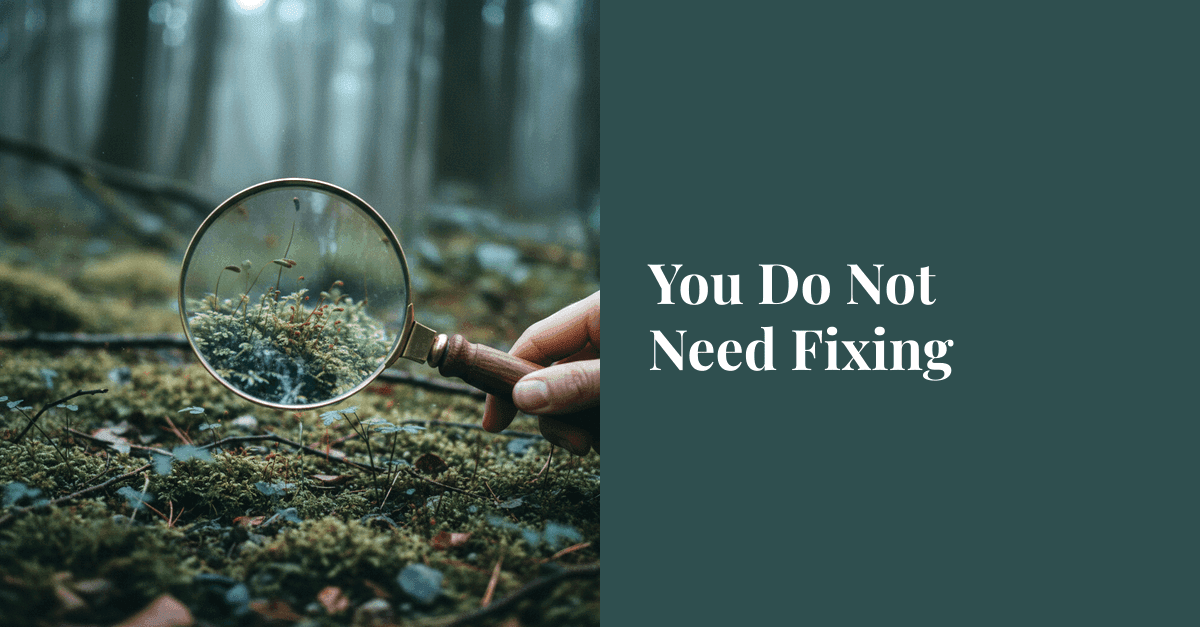
You do not need fixing. The patterns that feel like problems are usually intelligent adaptations that were formed under pressure. Most high-achievers try to change by identifying what is wrong and forcing a solution. But internal patterns do not respond to force. They respond to being noticed, understood, and gradually replaced with something that fits who you are becoming.
Most high-achievers approach personal change the same way they approach everything else. Identify the problem. Find the solution. Execute.
It makes sense. It is the logic that has worked in every other area of life. But when it comes to internal patterns, it almost always falls short.
Because the patterns driving your behaviour are not problems to be solved. They are systems to be understood.
You do not need fixing. You might need noticing.
There is a significant difference between the two. Fixing assumes something is broken. Noticing assumes something is operating beneath your awareness that, once seen, can be examined and, if necessary, changed.
Most of the patterns people carry into adulthood were formed in response to earlier environments. They were adaptive. Intelligent. Necessary. They helped you cope, succeed, belong.
The issue is not that they exist. The issue is that they are still running, often without your conscious consent, in contexts where they no longer serve you.
When you notice a pattern rather than try to fix it, something shifts. You stop fighting yourself. You start understanding yourself. And from that understanding, real choice becomes available.
Not forced change. Chosen change. The kind that holds because it comes from alignment, not pressure.