Last updated: 15 April 2026
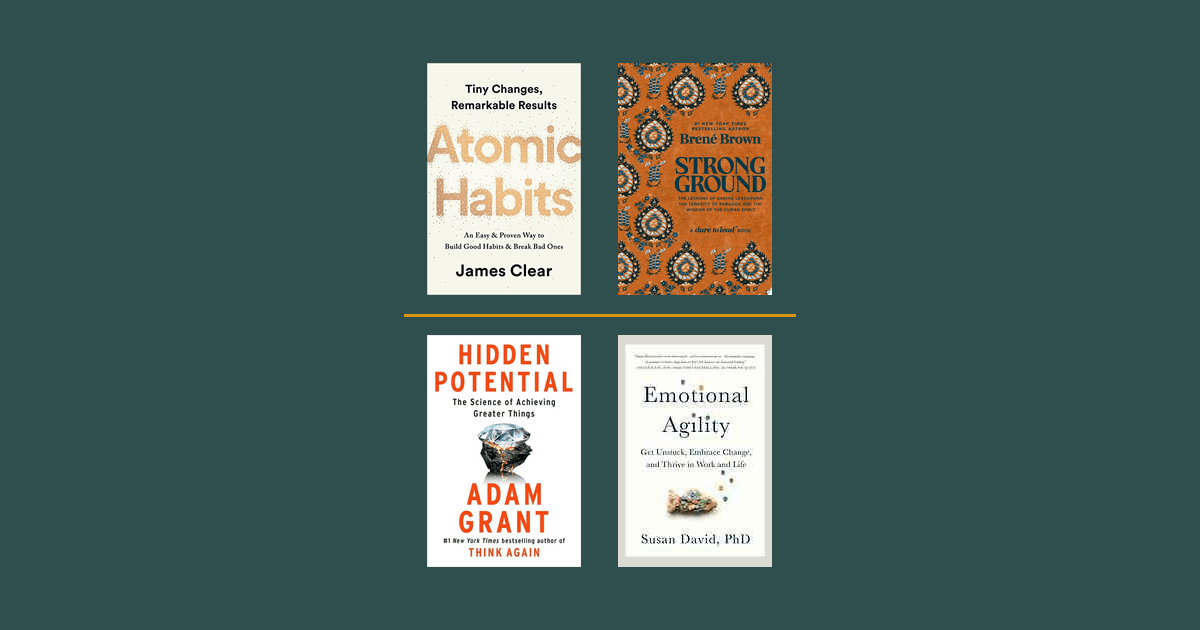
James Clear, Brene Brown, Adam Grant, and Susan David are all circling the same four patterns, just using different language. Those patterns are the Over-Functioner, the High-Performing Avoider, the Quiet Controller, and the Escaper. A PricewaterhouseCoopers and ICF study reports coaching generates a median ROI of seven times its cost. Jen Fairbairns, ICF-accredited identity coach with 3,500+ coaching hours, names what these four authors circle but rarely label directly.
Four of the sharpest minds in behaviour change are all circling the same thing.
James Clear. Brene Brown. Adam Grant. Susan David.
Different books. Different language. Different angles.
But underneath, the same four patterns.
The same four patterns I see in the room every single week.
So I thought it was worth naming.
The Over-Functioner
A senior leader I worked with described it like this.
She said: "I know I'm doing too much. I can see it. But when I try to stop, there's this feeling, like if I'm not the one holding it together, something bad will happen. Not to the project. To me."
That's The Over-Functioner.
Not someone who works hard. Someone whose system learned, often very early, that staying useful was the safest way to stay safe. Being helpful meant being needed. Being needed meant being valued. And that equation got wired in deep.
James Clear writes: "Your current behaviours are simply a reflection of your current identity. What you do now is a mirror image of the type of person you believe that you are, either consciously or subconsciously."
He's right.
And the people I work with know he's right. They've read the book. They've tried to apply it. They've decided who they want to be, built the small wins.
And something in them still won't shift.
Because the identity isn't just a belief they hold. It's a structure their nervous system built around being indispensable. Stepping back doesn't feel like rest. It feels like risk. Delegating doesn't feel like trust. It feels like losing the thing that makes you matter.
The exhaustion gets normalised.
The resentment goes underground.
And rest feels like something that has to be earned, not something they deserve.
The High-Performing Avoider
There's a version of this that looks, from the outside, like someone thriving.
High output. High standards. Always moving. Always delivering.
But underneath, there's a different engine running.
If I stop, I'll have to feel what's actually here.
Brene Brown gets close to this. She writes: "I always assumed that my emotions responded to my body freaking out. But really, my emotions are responding to my 'thinking' assessment of how well I can handle something."
That thinking assessment. That's the narrative running underneath the emotional experience. And in the people I see, it goes deeper than "I'm not sure I can cope."
It goes all the way to: if I'm not producing, I don't know who I am.
And in Strong Ground, Brown names another side of it: "I protected my 'freedom' by refusing to plan and schedule. I waited until the absolute last minute to make up my mind about my day. The result? Chaos, panic, anxiety, and absolutely zero freedom."
The constant motion. The emotional signals overridden and reframed as discipline. The discomfort converted into action rather than sat with.
This is The High-Performing Avoider.
The performance isn't the problem. The dependency on it as a regulator is.
Internal capacity doesn't expand with external success.
The fatigue gets reframed.
And the signal keeps getting overridden.
The Quiet Controller
What this one costs is almost invisible.
Because from the outside, it looks like competence. Composure. Someone who has their life together. Always a plan. Always two steps ahead. Always the one who spots the weak point before anyone else.
And internally, a low-grade vigilance that never quite switches off.
Adam Grant writes in Hidden Potential: "Growth is not about the genius you possess. It's about the character you develop. The true measure of your potential is not the height of the peak you've reached, but how far you've climbed to get there."
He's trying to shift the equation. To move people away from measuring themselves by outcome, by peak, by what they produced.
What I see in coaching is what happens when someone has built an entire operating system around controlling the outcome. Not because they're rigid. Because uncertainty, at some point, stopped feeling tolerable.
This is The Quiet Controller.
The control isn't a personality flaw. It's a regulation strategy. When uncertainty rises, the system tightens. More structure. More anticipation. More managing of variables.
The mental load increases.
Trust becomes conditional.
Delegation feels risky.
And they're rarely, if ever, fully relaxed.
The real work isn't learning to let go. It's building a steadiness that doesn't depend on having everything under control.
The Escaper
Doom scrolling. Binge-watching. Drinking to take the edge off. Comfort eating. Emotional withdrawal that gets masked as independence.
Not collapse. Not chaos.
Relief.
This is The Escaper.
And it doesn't look like any of the others from the outside.
Susan David writes this, and it stops me every time: "Rigidity in the face of complexity is toxic. When we're emotionally rigid, we get hooked by feelings and behaviours that don't serve us."
And elsewhere, in a reflection I find genuinely moving: "There is a future elderly self who will look back and decide whether it has been a good life. Are you looking after that person?"
The strategy isn't dramatic. It's a quiet turning-away from whatever feels too much in that moment. And the relief works, briefly. Which is why it keeps happening.
Avoidance delays decisions.
Relief replaces resolution.
Self-trust erodes quietly.
The real work is increasing the capacity to stay present when pressure rises. Not pushing through. Not gritting teeth. Building a genuine tolerance for being in it without needing to step out of it.
What I keep coming back to
These are some of the sharpest minds writing about behaviour, identity and change right now.
And they're all pointing at the same territory.
The relationship between who we are and how we regulate. What it costs when those strategies stop serving us. What becomes possible when we look at the pattern directly.
What I keep doing, across every session, every room, is getting specific about what that territory actually looks like when you're in it.
Because naming the broad idea isn't always enough. Sometimes you need someone to say: this is the pattern, this is how it formed, this is what it costs you, and this is what it looks like when it shifts.
You're not broken. The way you respond makes sense.
The question is whether it's still serving you.
And if something in this landed, if you read one of those four and felt your chest tighten slightly, or thought "that's me but I've never said it out loud," then you already know.
You don't need more information.
You need someone to look at the pattern with you.
The Behaviour Identity Archetype Quiz is a place to start. Two minutes. No fluff.
With you in the work, Jen
Sources:
- James Clear, "Identity-Based Habits" - jamesclear.com
- Brene Brown, "10 Learnings on Stress and Overwhelm" (Nov 2024) - brenebrown.com
- Brene Brown, Strong Ground (2025) - brenebrown.com
- Adam Grant, Hidden Potential (2023)
- Susan David, "Emotionally Rigid vs Emotionally Agile" + "Continuity of Self" - susandavid.com